
The Tasto journal · 28 March 2026 · 2 min read
One pan, cook once
A single pan, ten real ingredients, and something you'd happily eat twice in a row.
One-pan cooking is a design constraint, not a shortcut. The pan has to do the searing, the flavour-building, and the finishing - all without washing up becoming its own project.
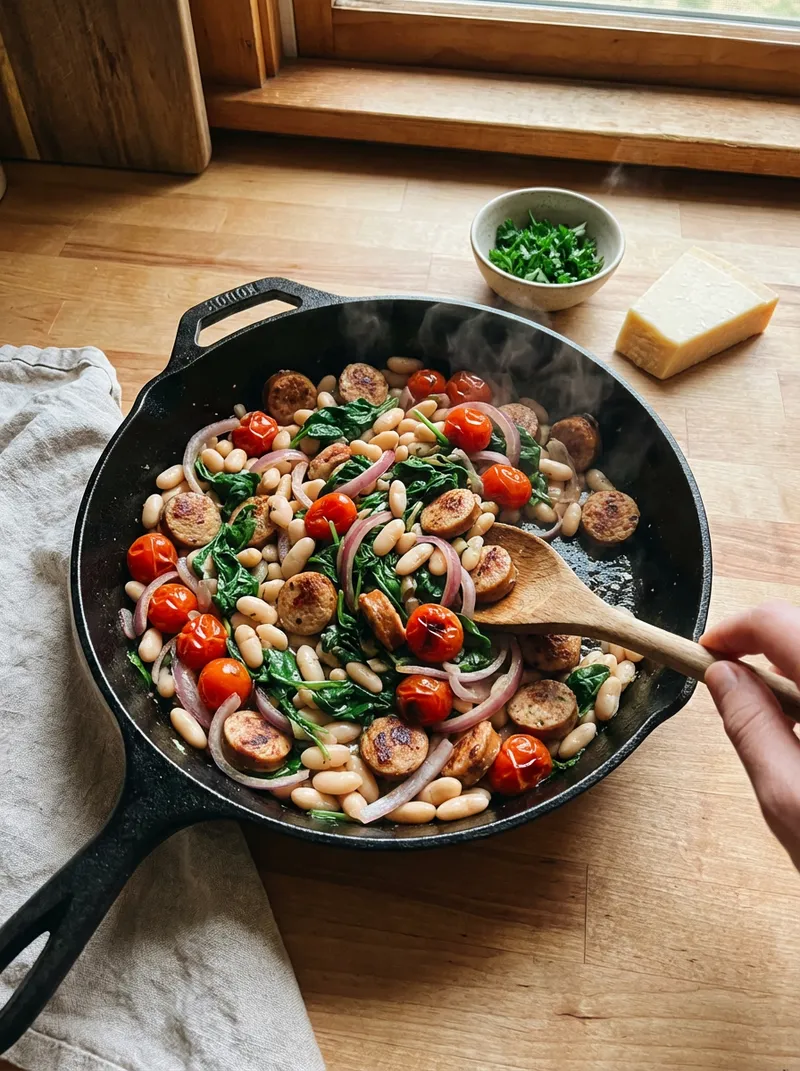
The pan choice matters more than people admit. A heavy cast-iron or a thick-bottomed stainless skillet, ideally twelve inches across, will outperform a non-stick almost every time for this style of cooking. The browning you want - the fond on the bottom of the pan, the caramelised edges of the protein - needs heat that non-stick can't really deliver.
Order of operations is the hidden craft. The protein goes in first while the pan is at peak heat. It comes out before it's quite done, rests on a board, and the pan does the vegetables and aromatics in the rendered fat. The protein goes back in at the end to finish - three minutes in residual heat is more than enough. This is how restaurant cooks get a thirty-minute plate to taste like an hour of work.
Acid at the end is the move. A squeeze of lemon, a splash of vinegar, a pour of wine into the hot pan to lift the fond. This is the difference between a one-pan meal and a beige one-pan meal. Don't skip it, even if it feels redundant - your tongue will register it more than the salt.
These recipes were built for that workflow. Each one pulls dinner together in a single cast-iron or sheet pan, with enough room at the end to scrape up the good bits and still have leftovers.